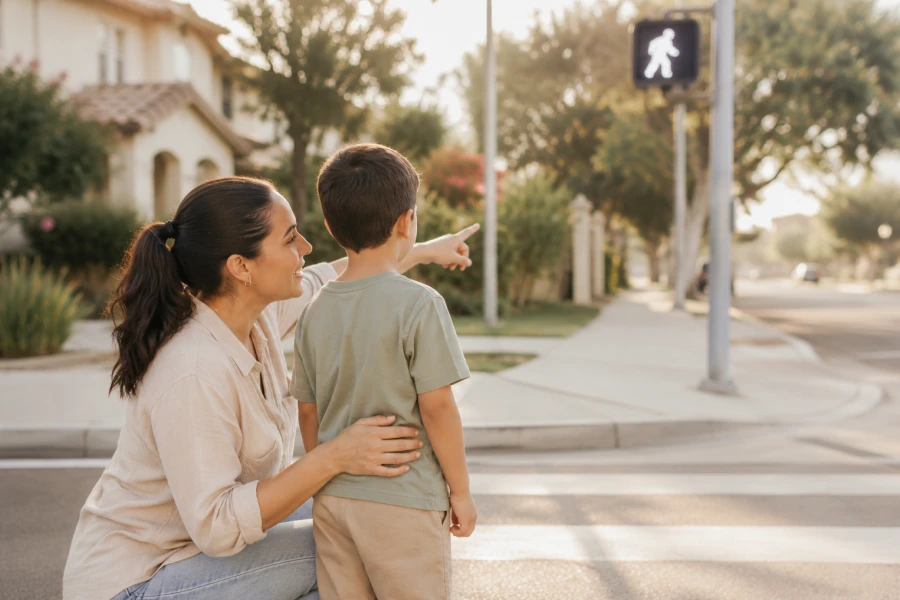
Parents often worry that teaching kids street safety will make children anxious about everyday travel. In practice, calm instruction usually creates the opposite effect. Children feel more secure when they understand predictable steps. They need clear actions for curbs, crossings, driveways, and parking lots. Begin with observation rather than warnings. Ask what they notice before offering corrections. This invites thinking instead of passive obedience. A steady approach to park safety tips and street awareness can share the same tone. Focus on skills, choices, and recovery after mistakes. Confidence grows when children know how to respond. Repeated success also reduces the need for constant adult prompting. The street becomes a place to navigate thoughtfully, not fearfully.
Children notice adult behavior long before they understand formal rules. They see whether parents stop fully at curbs. Phones used during crossings do not escape their attention. They also copy rushed shortcuts through parking areas. Make your own decisions visible by narrating them briefly. Explain why you wait even when the road looks empty. Point out hidden driveways and blocked sight lines. Consistent modeling strengthens street crossing habits without repeated lectures. Adults should follow the same standards when children are not leading. Credibility disappears quickly when rules apply only to younger family members. Children trust lessons more when adults demonstrate patience under real pressure. Even a rushed morning should not erase the standard.
Real streets provide context that pictures cannot fully reproduce. Begin on quiet routes with simple intersections. Ask children to choose the safest stopping point. Let them listen for vehicles before looking. Discuss bicycles, delivery vans, and cars reversing from driveways. Pause when construction changes the usual path. A thoughtful safe walking routine includes flexibility when conditions shift. Keep early practice short enough to maintain attention. Repeat the same route until decisions become smoother. Then introduce busier environments with closer supervision. Compare the new route with the familiar one. This helps children transfer principles instead of relying on memorized landmarks. Ask them to predict the safest response before each new crossing.
Younger children need concrete actions and direct physical support. Hold hands near roads and explain one step at a time. School-age children can compare safe and unsafe crossing choices. Preteens benefit from route planning and controlled independence. Ask them to identify risks before leaving home. Review how headphones, friends, or weather can affect attention. Age appropriate public space safety for kids should expand responsibility gradually. Avoid assuming maturity based only on confidence. Observe actual decisions in real settings. Freedom should follow demonstrated judgment, not pressure from peers. Families can review readiness together at regular intervals. Clear milestones make increasing independence feel fair and understandable.
Repetition matters because traffic conditions never look exactly the same. A familiar crossing may change during school dismissal. Parked vehicles can block a clear view. Rain reduces visibility and lengthens stopping distance. Practice the same core sequence in varied conditions. Ask children to explain what changed today. This builds flexible thinking rather than rigid memorization. Effective situational awareness for kids develops through repeated noticing. Praise careful observation even when the final answer needs correction. The goal is a thinking child, not a perfect performance. Mistakes during supervised practice can become valuable learning moments. Calm review keeps children willing to share uncertainty.
Friends can pull attention away from traffic at exactly the wrong moment. Talk about this before children begin walking together. Create a rule that everyone stops at each curb. Teach children to resist being rushed across a road. Practice simple phrases they can use with peers. Phones and headphones require equally clear limits. Explain how divided attention affects reaction time. Parents should model putting devices away near traffic. Review mistakes without embarrassment after group outings. Social confidence supports safety when children know they may choose caution. Rehearsing those words at home makes them easier to use outside. Parents can praise restraint even when friends react impatiently.
Readiness appears through consistent behavior across many walks. A child should stop without reminders. They should scan fully and notice turning vehicles. They need to handle unexpected changes without freezing. Route familiarity alone is not enough. Test judgment on several kinds of streets. Walk behind occasionally while observing decisions. Discuss errors after reaching a safe place. Increase independence in small, reversible steps. Continued check-ins keep growing freedom connected to thoughtful responsibility. Parents should revisit expectations after moves, school changes, or new transportation routines. Readiness develops through evidence, not a single birthday. A gradual review process makes new freedom feel earned, visible, and secure.



Leave a comment